
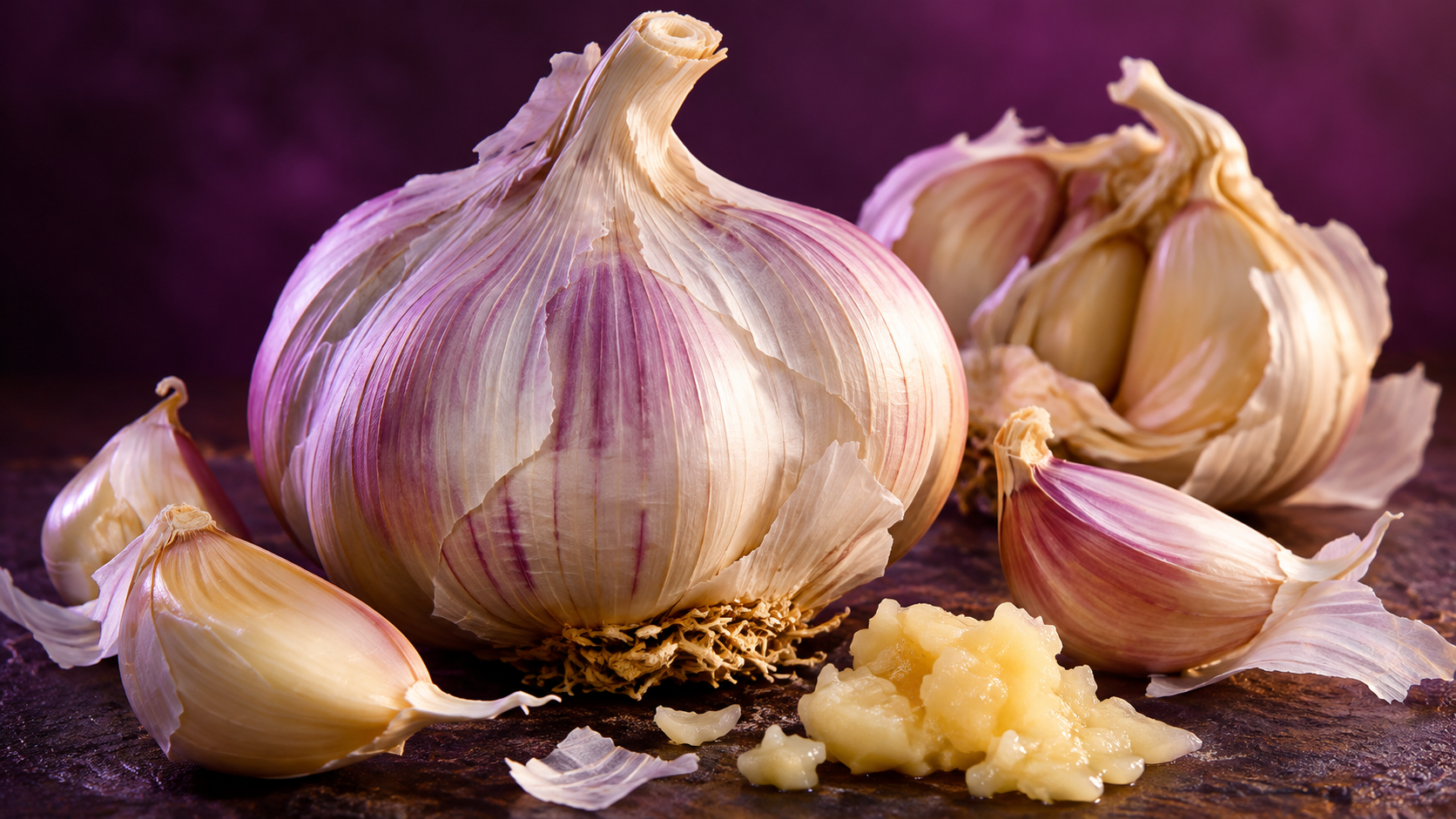
Garlic announces itself before the meal reaches the table. Its unmistakable aroma can transform a simple dish—and its place in the wellness conversation reaches well beyond the kitchen.
But what does the research actually tell us? The most useful answer starts with a question: are we talking about garlic as food, a particular supplement, or a treatment tested for a specific outcome?
Amy Fischer’s 2022 Good Housekeeping article, “The Health Benefits of Garlic, According to Registered Dietitians,” prompted this closer look. This BRH article is an original educational discussion, with additional research references rather than a reproduction of that feature. [1]
A small bulb with interesting chemistry
Cutting or crushing garlic brings together an enzyme and compounds that help form allicin, one of its best-known sulfur compounds. That chemistry helps explain why researchers study garlic. It does not, by itself, tell us what eating a clove will accomplish in a person. [1]
Fresh garlic, powders, oils and aged extracts should not be treated as interchangeable. A finding about one preparation needs to stay connected to the preparation actually studied.
Heart and metabolic health: promising findings, specific limits
The National Center for Complementary and Integrative Health reports that garlic supplements may produce small reductions in total and LDL cholesterol in people with elevated cholesterol. Evidence for a small blood-pressure reduction in people with hypertension is more limited. [2]
A 2024 systematic review and meta-analysis of randomized trials also found improvements in several blood-sugar and cholesterol measures. It did not find a significant overall triglyceride benefit. [3]
The review combined studies using different preparations, amounts and treatment periods, and some results varied substantially between studies. That makes the findings worth following without turning them into a promise about a particular meal or bottle.
Changes in a laboratory measurement also do not automatically establish fewer heart attacks, longer life, or a cure for diabetes. Garlic should not replace prescribed treatment.
What about immunity and cancer?
These subjects deserve careful wording. NCCIH describes the human evidence for garlic supplements and immune support as sparse and limited by small, weak studies. Its assessment also says garlic does not appear to lower stomach-cancer risk; its relationship with colorectal-cancer risk remains uncertain. [2]
That leaves room for investigation. It does not justify presenting garlic as an antiviral medicine or a proven way to prevent or treat cancer.
Maurice’s perspective: tradition, experience and respect for potency
Garlic has a long history in traditional remedies, including Ayurveda, and it also appears in homeopathic practice. That history is part of what draws me to it. [4, 5]
In my 19 years of coaching clients, I have seen benefits that I associate with garlic—not only in my coaching work, but also among family members and in my own experience. Those personal observations are one reason I believe garlic deserves thoughtful attention.
Garlic can be used as food, as a powder or as a tincture. I respect its potency, particularly in concentrated preparations. The amount used in a meal is different from a supplemental amount, and there is no single “therapeutic dose” that fits every preparation or every person.
Before using garlic as a dietary supplement, consult a qualified healthcare professional or pharmacist, especially if you take prescription medicines. Ask about possible interactions and whether a particular product is appropriate for you. Natural products still deserve careful, individualized consideration.
— Maurice Massey, Founder and Holistic Wellness Coach, Bridgett Renee Health
Bring the conversation back to everyday life
For someone who enjoys it, garlic can earn its place at the table through flavor alone. Try it in a meal you already like, notice what you tolerate, and resist the pressure to turn every ingredient into a protocol.
Before choosing a supplement, bring practical questions to your healthcare team:
- Which preparation was studied, and for what purpose?
- Is the likely benefit meaningful for my situation?
- Could it interact with something I already take?
- How would we know whether it was helping?
“Natural” still deserves individual attention
Garlic can cause digestive discomfort or allergic reactions. Supplements may increase bleeding risk, particularly around surgery or when combined with anticoagulants or aspirin. Discuss supplements with your clinician or pharmacist, and do not apply raw garlic to skin; it can cause chemical burns. [2]
Garlic offers a reason for curiosity—not a reason to stop asking questions. A thoughtful wellness conversation can appreciate a familiar food while keeping the evidence, the preparation and the individual in view.
For help organizing wellness questions, explore General Wellness coaching or start with a free 20-minute phone introduction. BRH consultations are by phone, based in New York and available to clients worldwide.
Educational information, not individualized medical advice. Wellness coaching does not diagnose or treat disease. This article has not been medically reviewed.
Sources and credit
1. Amy Fischer, M.S., R.D., C.D.N. “The Health Benefits of Garlic, According to Registered Dietitians.” Good Housekeeping, July 18, 2022. Inspiration and credited original feature; no affiliation or endorsement implied.
2. National Center for Complementary and Integrative Health. Garlic: Usefulness and Safety.
3. Zhao X, Cheng T, Xia H, Yang Y, Wang S. Effects of Garlic on Glucose Parameters and Lipid Profile: A Systematic Review and Meta-Analysis on Randomized Controlled Trials. Nutrients. 2024;16(11):1692. DOI: 10.3390/nu16111692.
4. Richard S. Rivlin. Historical Perspective on the Use of Garlic. The Journal of Nutrition (2001). Historical-use reference; not evidence of efficacy for a particular condition.
5. Institute of Mathematical Sciences. IMPPAT: Allium sativum. Curated record identifies garlic in Ayurveda and homeopathy, among other systems. Traditional-use classification does not establish a clinical benefit.
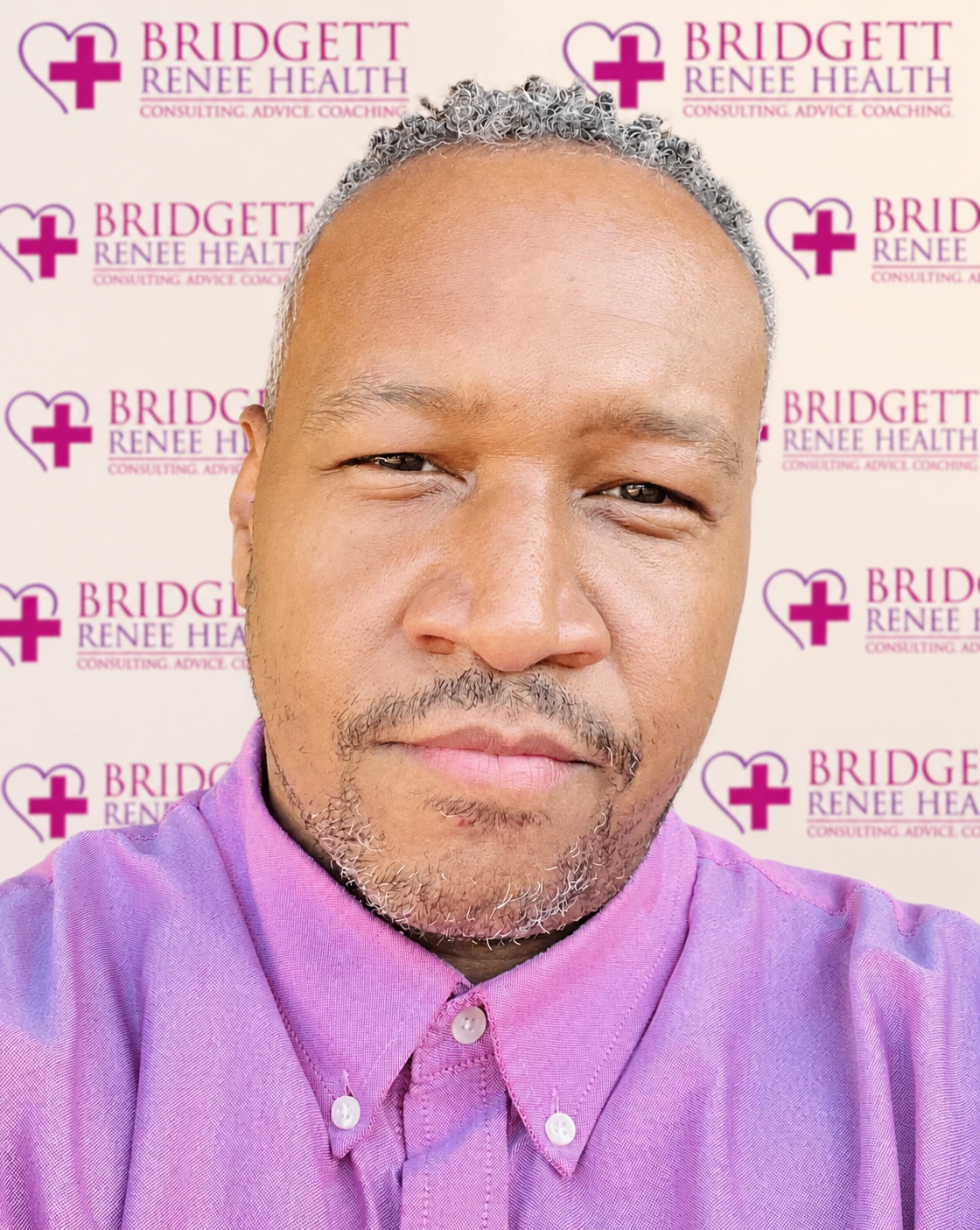
A note about the author.
Maurice Massey is the founder of Bridgett Renee Health, bringing 19 years of hands-on coaching experience. His work is dedicated to the memory of his wife, Bridgett Renee.
Meet Maurice ↗