
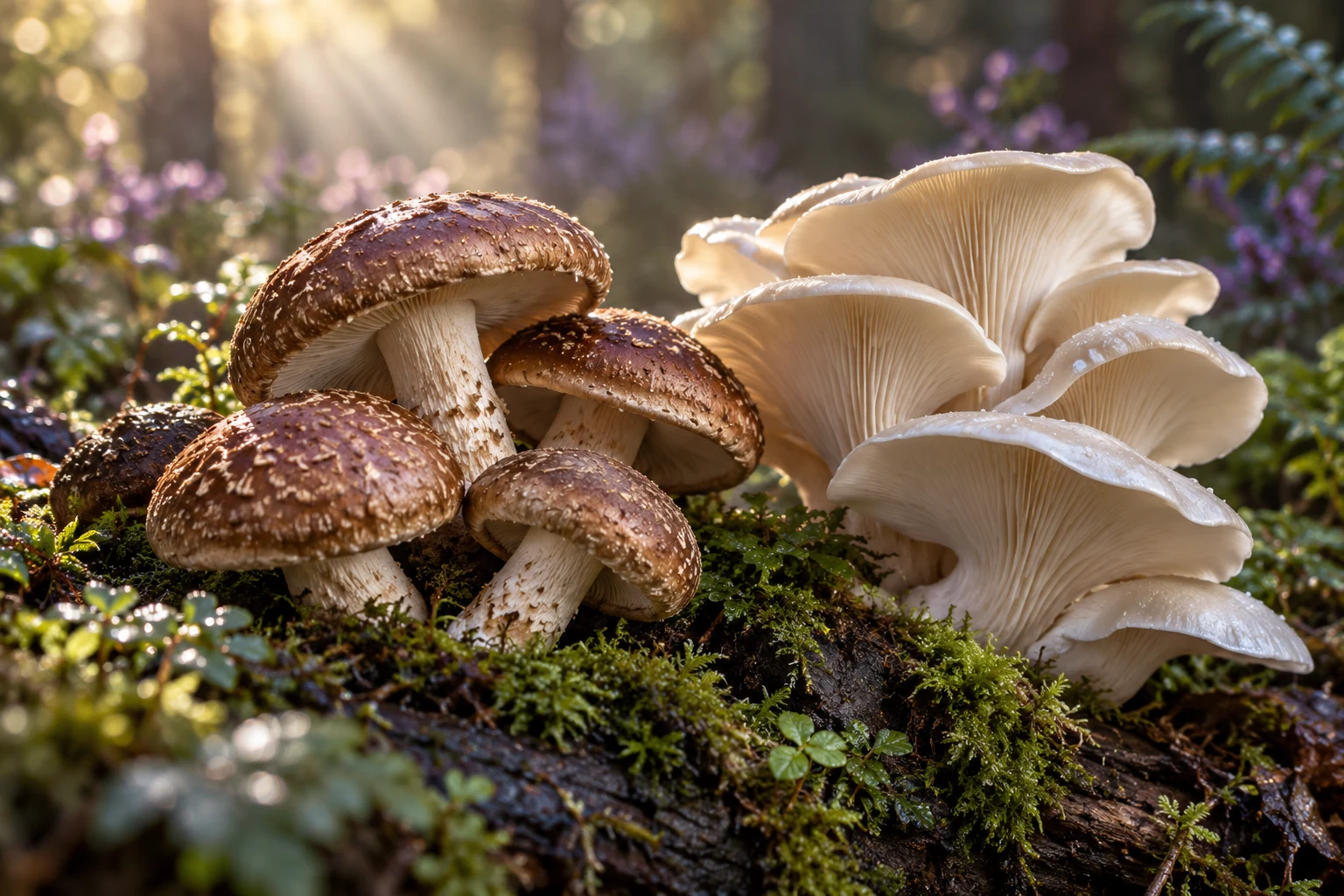
Featured image: AI-generated illustration of shiitake and oyster mushrooms. These species were not tested in the study; the experimental beta-glucan came from baker’s yeast.
Could a compound found in fungi help the body weather the flu by protecting the lungs? A McGill-led research team explored that possibility in mice. The results are promising and could eventually lead to benefits in humans if clinical studies confirm them. The findings invite a fascinating question: how can we help the immune system defend us while limiting the damage caused by its own response? [2]
This is a commentary on research published in Nature Immunology on January 8, 2025. The work was preclinical, meaning it explored a possible approach before establishing its benefits in patients. [1]
First, what is beta-glucan?
Beta-glucans are carbohydrate chains found in sources including fungi and grains. A shared name does not make every preparation interchangeable. McGill’s announcement emphasizes that the structure of the compound matters. Mushrooms and yeast belong to the fungal world, but a plate of mushrooms, a capsule, and a laboratory reagent are different things. [2]
Which mushroom did the scientists use? None was identified as the source of a tested whole-mushroom treatment. The paper specifies reagent G5011; its manufacturer identifies it as glucan from baker’s yeast, Saccharomyces cerevisiae. The mushroom photograph accompanying this article is an illustration, not evidence for shiitake, oyster, reishi, or any other species as a flu treatment. [1] [3]
Your immune system has several jobs
The innate immune system is your fast, general response team: barriers and cells that react quickly to danger. The adaptive immune system develops more targeted responses, involving antibodies and specialized B and T cells. These systems cooperate. Vaccination works by helping establish protective immune memory. [4]
Among the early responders are neutrophils, white blood cells that travel to infection sites and help destroy microbes. Think of them as emergency crews that can arrive quickly and bring powerful equipment. [5]
The finding in everyday language
The treated mice experienced less severe illness and better survival, with less lung inflammation and injury. Yet the researchers did not find a corresponding reduction in lung viral load. In plain language, the animals coped better with the infection without having less virus in the measurements reported. [1]
That distinction is called disease tolerance: preserving the body’s ability to function during an infection. Resistance focuses on controlling the pathogen itself. Imagine a house facing a storm: removing the storm and reinforcing the house are different ways to reduce harm. The analogy describes two goals; it does not mean an infected person can safely ignore the virus. [2]
How could immune cells change their behavior?
The proposed mechanism involved bone-marrow blood-forming cells producing a distinct, relatively immature neutrophil population. Dectin-1 sensing and type I interferon signaling helped enable the response; certain T cells helped recruit neutrophils into lung tissue. The neutrophils used mitochondrial energy metabolism and produced IL-10. [1]
| Research term | Everyday meaning |
|---|---|
| Bone marrow | The tissue inside bones where blood-cell production takes place. |
| Neutrophils | Fast-responding immune cells—one part of the emergency crew. |
| Dectin-1 | A sensor on some immune cells that can recognize fungal cell-wall material. |
| Type I interferons | Immune messages that help coordinate responses to danger; their signaling was needed for the effect in this experiment. |
| Mitochondria | Structures that help cells make usable energy. |
| IL-10 | An immune messenger that can help restrain inflammation. |
IL-10 is a cytokine—a signaling protein. It can reduce the production of other inflammatory signals. For a simple analogy, it can act like a brake on parts of the response. A useful brake is part of a working vehicle; it does not make the engine unnecessary. [6]
“Reprogramming” here refers to altered cell function and development. The broader idea of trained immunity is that an earlier encounter can leave innate immune cells behaving differently during a later challenge. It is a kind of functional memory, rather than the same targeted antibody memory associated with vaccination. [7]
Why the mouse experiment is not a supplement instruction
The mice received purified beta-glucan by injection into the abdominal cavity before infection—not in food or oral capsules. Protection was examined with infection challenges seven and thirty days later. These details prevent a direct jump from the experiment to a human serving size or supplement dose. [1]
Before translating a finding like this into advice, researchers need answers to practical questions: Does the same approach help people? Which formulation and route work? What dose is safe? Who benefits, and who might be harmed? Does it help after symptoms begin? This paper alone cannot settle those questions.
A further finding makes the story more interesting
A separate mouse study from the same research group, published in eLife in July 2025, found that beta-glucan immune training could worsen lung injury under different experimental conditions involving bacterial or viral inflammatory triggers. That work focused on alveolar macrophages—immune cells living in the lungs’ air sacs. It was not the same influenza experiment, and it did not establish that eating mushrooms causes this injury. [7]
My interpretation: the context of an immune response matters. An effect that helps in one model may harm in another. That makes careful testing more valuable, and blanket promises about “boosting immunity” less useful.
My perspective: promising potential for people
What interests me is the possibility of preserving function while the body deals with an infection. For readers who value whole-person health, that is a meaningful research direction: ask how a person is coping, as well as what is causing the illness.
But curiosity should lead us toward better questions. A beautiful mushroom, an impressive laboratory result, and a proven treatment are three different stages of a story. We can appreciate the first, investigate the second, and require evidence before claiming the third.
This study supports further research into fungal beta-glucan and immune regulation. It does not show that mushroom supplements prevent or treat flu in people, or replace vaccination or prescribed antivirals. Discuss supplements with your clinician, especially if you have an immune condition or take medicines that affect immunity.
For help understanding wellness information and preparing questions for your healthcare team, explore general wellness coaching or book a free 20-minute phone introduction.
Sources and research notes
- Khan N, Tran KA, Chevre R, et al. β-Glucan reprograms neutrophils to promote disease tolerance against influenza A virus. Nature Immunology. 2025;26:174–187. DOI: 10.1038/s41590-024-02041-2. Author correction, February 7, 2025: a duplicated graph panel in Figure 5a was corrected.
- McGill University. New discovery could help protect against influenza. February 17, 2025.
- Sigma-Aldrich. G5011: Glucan from baker’s yeast (S. cerevisiae). Reagent-source verification, not a product recommendation.
- NIH/NIGMS. What Is the Immune System?
- National Cancer Institute. Neutrophil definition.
- National Cancer Institute. IL-10 definition.
- Prével R, et al. β-Glucan reprograms alveolar macrophages via neutrophil/IFNγ axis in a murine model of lung injury. eLife. Version of record July 8, 2025. DOI: 10.7554/eLife.102068.3.
Research commentary by Maurice Massey, Holistic Wellness Coach and Founder of Bridgett Renee Health. Educational information, not medical advice. No affiliation with the researchers, journals, or reagent manufacturer is implied.
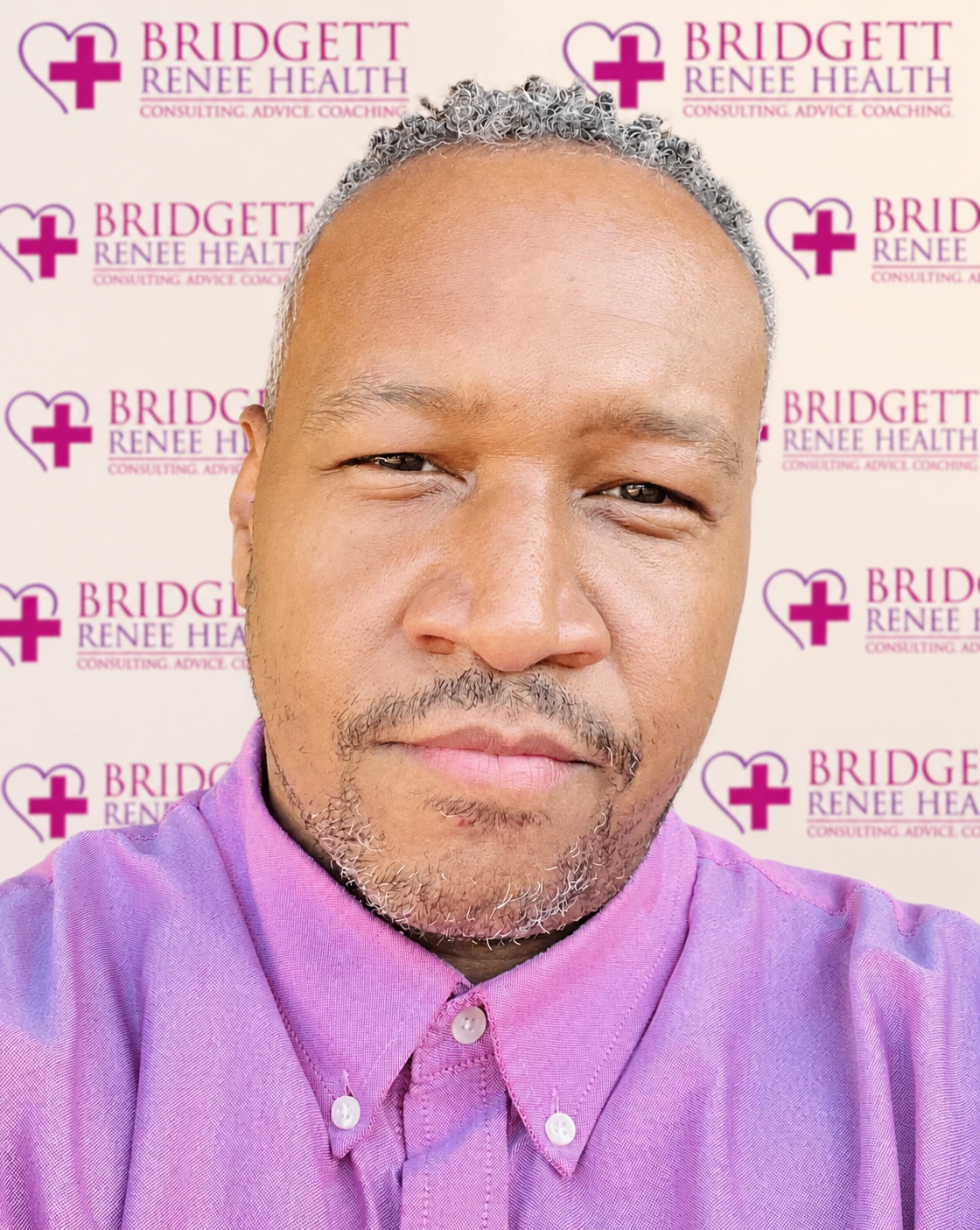
A note about the author.
Maurice Massey is the founder of Bridgett Renee Health, bringing 19 years of hands-on coaching experience. His work is dedicated to the memory of his wife, Bridgett Renee.
Meet Maurice ↗